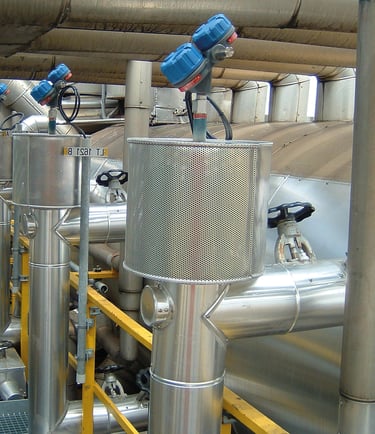
Steam Blowdown Vessel Instrumentation
Client Requirement
A major power generation facility required the installation of new level and temperature monitoring systems on a steam blowdown vessel.
The project was initiated due to concerns that excessive steam dumping during plant startups was causing thermal shock, accelerating vessel degradation, and reducing service life.
The client’s objectives were to:
Quantify vessel thermal stress to guide operational decisions and protect asset life.
Maintain water level within safe limits to prevent unsafe operating conditions.
Provide Control Room Operators with clear, real-time visual indication of vessel condition through DCS displays and local instrumentation.
Complete the works during a pre-planned shutdown without impacting concurrent mechanical workscopes.
Project Context
The steam blowdown vessel is a safety-critical component in steam and condensate management.
The engineered solution included:
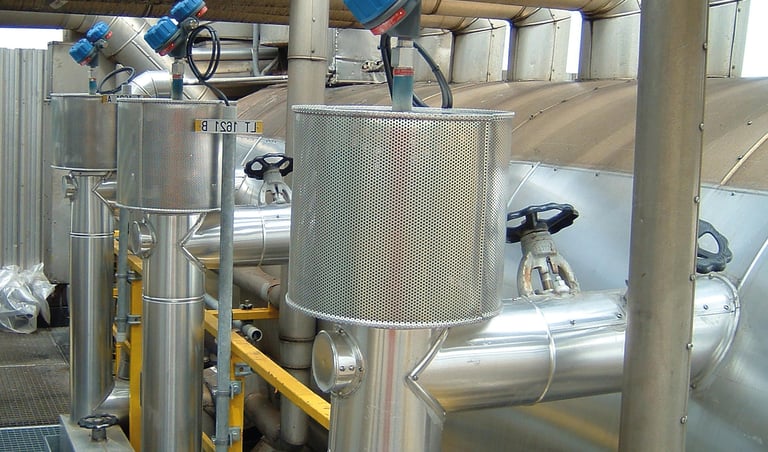
A guided wave radar (GWR) level transmitter for high-accuracy water level measurement.
A magnetic level gauge for immediate local visual indication.
Six surface-mounted temperature transmitters positioned at strategic points to monitor vessel shell temperature.
Integration of all signals into the facility’s Distributed Control System (DCS) with updated control logic and Human-Machine Interface (HMI) graphics.
Execution Challenges
Simultaneous workfronts: Critical mechanical works (pipe replacements, coded welding) taking place in the same area.
Tight outage window: All scopes to be completed within a fixed shutdown period.
Hazardous environment protocols: Strict adherence to isolation, permit-to-work, and hot work controls.
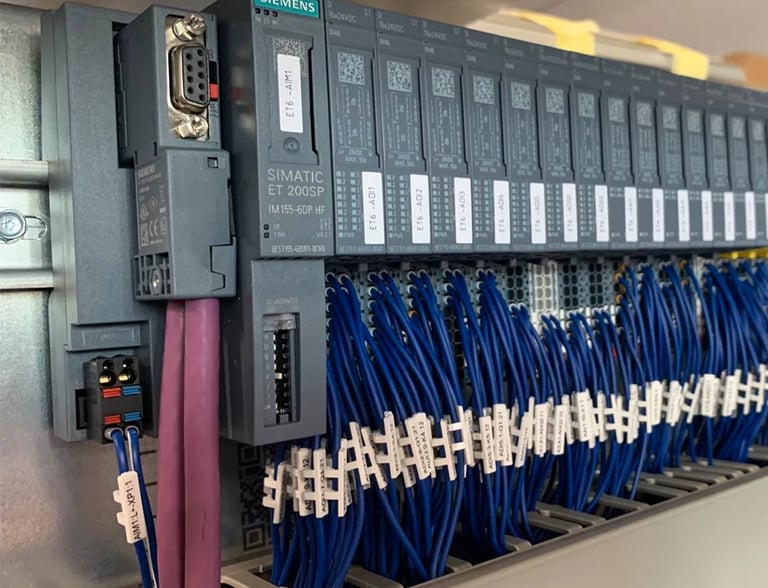
Full control system integration: Adding new I/O hardware, updating logic, and delivering operator-facing displays.
Our Delivery Approach
Coordination & Supervision
Worked closely with the facility’s mechanical engineer and the third-party mechanical contractor to ensure the installation of the bridle assembly was completed to instrumentation requirements and without scope conflicts.
Sequenced instrumentation works to align with mechanical activities, avoiding operational clashes.
Electrical & Instrumentation Installation
Mounted and connected the guided wave radar transmitter and magnetic level gauge after bridle installation was complete.
Installed six surface-mounted temperature transmitters into pre-fabricated welded sockets provided by the mechanical contractor.
Installed and configured new analogue I/O cards in the DCS for additional signals.
Control System Integration
Configured new I/O channels in the DCS.
Developed new control logic and alarm setpoints for vessel level and temperature.
Designed and implemented updated HMI graphics to give Control Room Operators a clear, real-time visual display of vessel conditions.
Commissioning & Handover
Performed inspection and loop testing of all new instrumentation.
Conducted cold commissioning to confirm wiring, signal integrity, and DCS functionality.
Final commissioning carried out using controlled water filling of the vessel to verify level and temperature readings under live conditions.
Delivered as-built documentation and provided operator familiarisation.
Project Outcomes
Enhanced Operator Visibility: Control Room Operators now have reliable DCS and local instrumentation to monitor vessel level and temperature.
Improved Asset Protection: Data allows proactive operational adjustments to minimise thermal damage during startups.
Seamless Multi-Discipline Integration: Successful coordination with mechanical contractors ensured no disruption to parallel works.
On-Time Completion: All works delivered within the planned shutdown window.
Zero Safety Incidents: Full compliance with site safety standards.